Trusted and leading provider of sustainable waste management solutions from 20 years. (786) 655-7070

Miami-Dade County’s cooking oil disposal starts with one rule. Miami-Dade County residents should keep used cooking oil out of sinks, garbage disposals, storm drains, and the ground.
Miami-Dade County recommends cooling fats, oils, and grease, sealing them in a can or bottle, and disposing of them safely in household trash or through approved drop-off programs.
Miami-Dade County wastewater infrastructure was not designed to accept fats, oils, and grease. The Miami-Dade County guidance on Fats, Oils, and Grease (FOG) explains that fats, oils, and grease can block wastewater flow when they enter drains.
Used cooking oil can clog pipes after cooling because it congeals and adheres to pipe walls. A single pour can move downstream and still solidify in cooler sections of the plumbing system.
A grease-related blockage can trigger slow drains, backups, and expensive service calls in Miami-Dade County homes and food service facilities.
Miami-Dade County storm drains create an environmental pathway that does not belong in a kitchen routine.
The Miami-Dade County FOG guidance warns against discharging fats, oils, and grease into storm drains because they do not connect to household wastewater treatment systems.
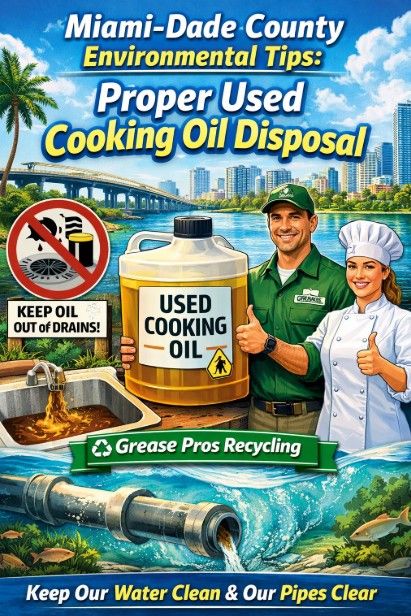
Properly used cooking oil disposal follows a short chain of custody. A short chain of custody helps prevent spills, odors, pests, and dumping into drains.
Miami-Dade County publishes a simple resident tip that supports the chain of custody. Miami-Dade County recommends wiping cooking equipment before washing to prevent fats, oils, and grease from entering the drain.
GreasePros Recycling helps Miami-Dade residents avoid messy drain clogs by providing safe drop-off steps for used cooking oil. Keep disposal simple and clean. Contact us.
If you’re ready to get started, call us now!
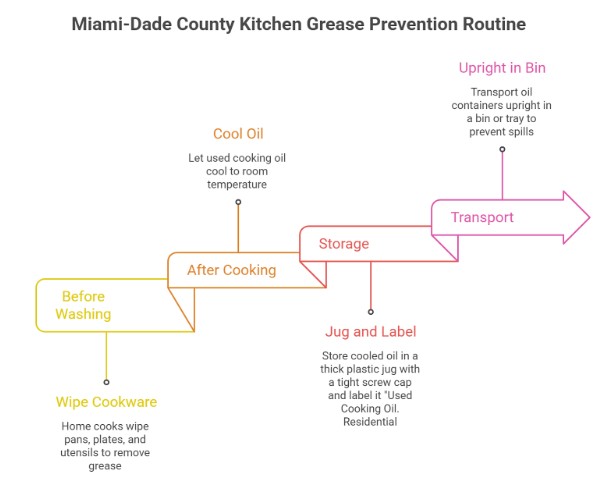
Miami-Dade County prevention guidance works best when kitchen routines remain consistent.
Miami-Dade County recommends wiping cookware before washing to prevent fats, oils, and grease from going down the drain.
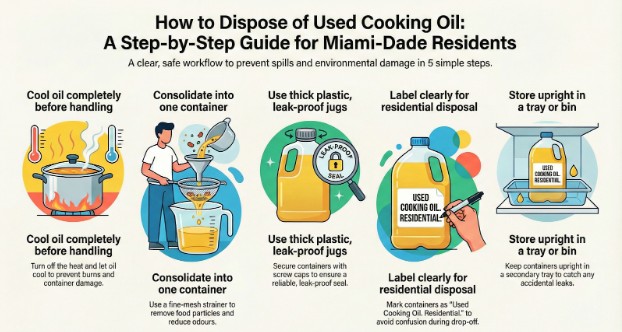
Miami-Dade residents should cool used cooking oil, consolidate it into a single container, seal the container tightly, label it “Used Cooking Oil,” and store it upright in a tray. This workflow prevents spills, odors, and accidental dumping into the drain.
Home cooks should turn off the heat and let the used cooking oil cool completely. Hot oil creates a burn risk and can deform weak containers.
Home cooks should consolidate used cooking oil into one container when possible. Consolidation reduces the number of containers that could leak during storage and transport.
A fine-mesh strainer can remove food particles and reduce odor in households that fry frequently. Straining is optional for basic disposal.
A thick plastic jug with a screw cap works well for most households. A leak-proof seal matters more than the container brand.
The GreasePros Recycling Miami-Dade guide recommends storing used cooking oil in easy-to-handle containers such as plastic jugs or bottles.
A clear label should read “Used Cooking Oil. Residential.” A clear label reduces confusion during drop-off screening and prevents accidental mixing.
A plastic tray or bin prevents a mess if a cap loosens. An upright position reduces the risk of leaks during transport.
Miami-Dade residents usually choose sealed household trash disposal for small amounts or resident drop-off programs for cleaner handling.
Miami-Dade County recommends sealing cooled FOG in a can or bottle. Drop-off options require sealed, labeled containers and proof of residency.
Miami-Dade County advises residents to seal cooled fats, oils, and grease in a can or bottle and dispose of them in household trash. The Miami-Dade County FOG guidance page frames that method as a harmless approach when residents keep fats, oils, and grease out of drains.
Household trash disposal works best when the container remains leak-proof. Household trash disposal also works best when a household produces small amounts from occasional pan frying.
Miami-Dade County operates residential programs for the safe drop-off of household chemicals and related items.
The Miami-Dade County Home Chemical Drop-Off Mobile Events page states that events are open to Miami-Dade residents only and are not available for business or commercial use.
Miami-Dade County also posts county program information on the county site titled “Drop Off Home Chemicals, Electronics And More at Mobile Events,” which explains resident eligibility and ID requirements.
GreasePros Recycling publishes a local residents’ resource titled “Miami-Dade.” Where to Drop Off Cooking Oil (Residential Guide) focuses on used cooking oil preparation and resident-friendly logistics.
The GreasePros Recycling Miami-Dade guide states that most home chemical collection centers in Miami-Dade allow up to 5 gallons of used cooking oil per resident and do not accept large or commercial amounts.
Miami-Dade drop-off success depends on preparation. Bring valid identification when required, use leak-proof jugs with tight caps, label containers “Used Cooking Oil,” transport containers upright in a bin, and follow resident-only limits to avoid being turned away.
When cooking oil builds up, plumbing stress follows. GreasePros Recycling supports safer storage, clear labeling, and local Miami-Dade disposal options. Get practical help now. Schedule an appointment.
If you’re ready to get started, call us now!
Miami-Dade restaurants should use secure oil containers, schedule consistent pickups, and maintain pickup records to reduce overflow, theft, and inspection risk.
A documented used cooking oil program supports operational safety and compliance, especially in high-volume kitchens.
Miami-Dade County requires a permit for many non-residential facilities that have the potential to discharge fats, oils, or grease into the public sanitary sewer system.
The Miami-Dade County page titled “FOG Discharge Control Operating Permit” states that any non-residential facility that handles, prepares, or processes food and has the potential to discharge fats, oils, or grease requires an FOG operating permit.
A compliance-ready used cooking oil program uses secure containers and scheduled collection.
A dedicated oil container reduces ad hoc handling. A sealed lid reduces odor and prevents rainwater contamination. A secure location reduces theft risk.
GreasePros Recycling focuses on container protection in Locked Containers & Used Cooking Oil Collection, highlighting why It Matters in Miami-Dade, framing locking as a theft and contamination control.
Miami-Dade restaurant operators seeking a compliance-first approach can use the GreasePros Recycling guide, Guide To Miami-Dade FOG & GDO Compliance For Restaurants (2025 Edition), for local terminology and operational expectations.
A restaurant should keep pickup logs, service agreements, and any tickets or certificates provided by the hauler.
A single folder of records makes inspections faster and reduces conflict when a missed pickup or overflow event occurs.
GreasePros Recycling discusses inspection pressure points in Avoiding FOG Violations in Miami. Grease Trap Cleaning Schedules That Pass Inspections, which connects schedules and documentation to passing inspections.
Miami-Dade disposal failures usually result from sink dumping, using hot water and soap, using leaky containers, or storing oil outdoors without a sealed lid.
Each mistake increases spill risk, odor complaints, pest attraction, and the likelihood of drain blockage.
Miami-Dade County explicitly advises residents to avoid pouring fats, oils, and grease into sinks, garbage disposals, or storm drains. The Miami-Dade County FOG guidance page explains that sewers are not designed to accept fats, oils, and grease.
Hot water temporarily moves the oil, then the oil cools later. Late cooling still creates buildup.
A leaking container creates a slip hazard and a cleanup burden. A leaking container also creates a negative habit loop because residents avoid the next disposal trip.
Outdoor exposure increases the attraction of odors and pests. Outdoor exposure also increases the risk of theft for accessible containers. A locked container provides practical control in high-traffic areas.
| Situation | Best Method | Why The Method Works |
| Small household amounts from pan frying | Cool oil, seal oil in a bottle or can, dispose of in household trash | Miami-Dade County recommends sealing cooled fats, oils, and grease in a can or bottle before trash disposal, so fats, oils, and grease stay out of drains |
| Household prefers drop-off | Use county residential drop-off programs with sealed, labeled containers | Miami-Dade County residential drop-off programs restrict business waste and use resident eligibility rules, so household disposal remains manageable |
| Restaurant or high-volume kitchen | Use scheduled pickup with secure containers and written records | Secure containers reduce theft and contamination, and scheduled pickup reduces overflow risk in busy seasons |
GreasePros Recycling helps Miami-Dade restaurants prevent spills, odors, and compliance issues with secure containers and reliable pickups. Reduce risk before the next inspection. Contact us.
Can Miami-Dade residents pour cooking oil down the sink with hot water and soap?
Miami-Dade County advises residents to avoid pouring fats, oils, and grease down garbage disposals, sinks, or storm drains. Hot water does not prevent used cooking oil from solidifying and causing clogs farther down the plumbing system.
What is the safest at-home method for disposing of used cooking oil in Miami-Dade?
The safest at-home method cools used cooking oil, seals it in a leak-proof bottle or can, and discards the sealed container in household trash or at a resident drop-off location. Miami-Dade County recommends sealing cooled fats, oils, and grease in a can or bottle.
How much used cooking oil can Miami-Dade residents drop off at home chemical centers?
The GreasePros Recycling resident guide states that most Miami-Dade home chemical collection centers allow up to 5 gallons of used cooking oil per resident and do not accept large or commercial amounts.
Do Miami-Dade home chemical drop-off events require ID?
Miami-Dade County states that home chemical drop-off mobile events are open to Miami-Dade residents only and are not available for business or commercial use. County program pages describe resident eligibility and ID requirements.
What should Miami-Dade residents do with greasy pans and plates before washing?
Miami-Dade County recommends wiping cooking equipment before washing to prevent fats, oils, and grease from entering the drain and sewer system.
What should Miami-Dade restaurants do with used fryer oil?
Miami-Dade restaurants should use secure containers and scheduled pickup with records. Miami-Dade restaurants can use the Grease Pickup Service. Free Containers, Same-Day Response for a Miami-specific collection option designed for operational reliability.
Founded with a vision to revolutionize the used cooking oil recycling industry, GreasePros Recycling has established itself as a trusted and leading provider of sustainable waste management solutions. With over 20 years of experience, our dedicated team brings extensive expertise and a commitment to environmental stewardship.
Quick Links
Contact Information
Get in Touch with GreasePros