Trusted and leading provider of sustainable waste management solutions from 20 years. (786) 655-7070

Used cooking oil pickup is a business decision that affects far more than scheduling. It affects your total monthly cost, how often staff handle and transfer oil, and how likely you are to deal with oil spills, slippery floors, odors, pests, or theft.
In general, weekly pickup works well for high-volume kitchens where oil accumulates quickly, and storage runs close to capacity.
Monthly pickup can work for moderate-volume operations when containers are sized correctly, secured, and managed through a consistent handling process.
If you want a fast answer, here it is: go weekly if you’re burning through big volumes, monthly if you’re not. Simple enough, right?
Here’s a quick breakdown:
Watch your oil volume and storage. If you’re filling more than one tote a month, weekly pickup nearly always saves you time and trouble. Less oil? Monthly pickup might be cheaper.
Don’t forget local rules and fire codes. Store oil in sealed, labeled containers, away from heat. Check local regulations and use a hauler that provides receipts and logs pickups.
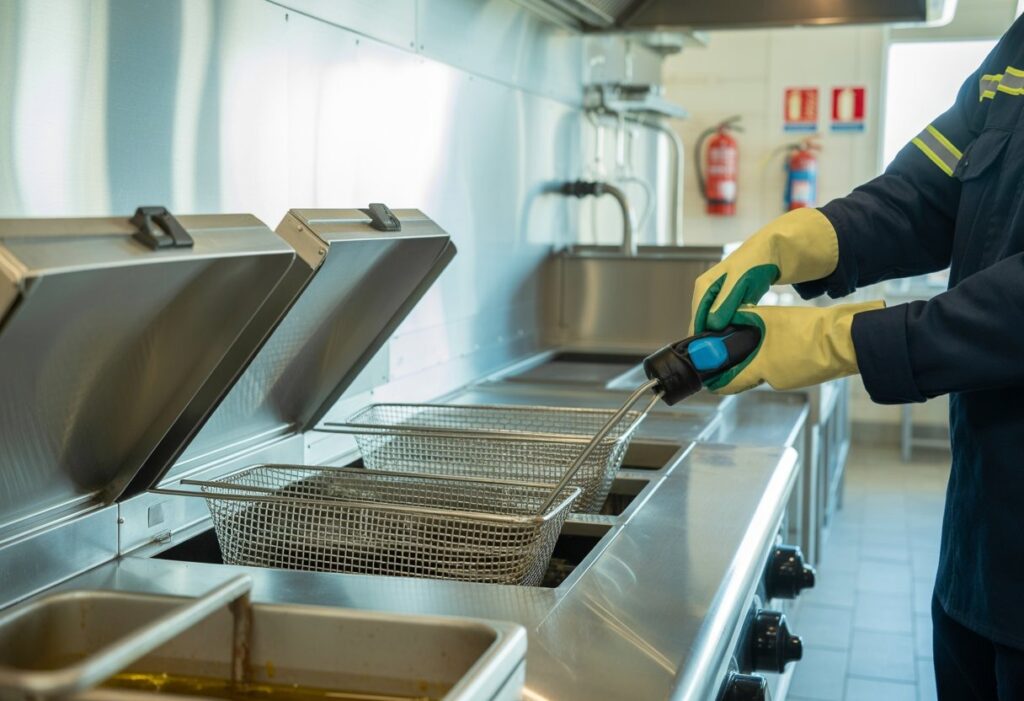
Weekly pickup means a professional hauler collects your used cooking oil each week. You pay more often, but less oil sits on-site, and you lower fire and spill risk.
Monthly pickup is every 4 weeks. You pay less per visit, but you’re storing a lot more oil, which can lead to more spills, odors, or compliance headaches if your tanks fill up.
To compare apples to apples, check price per gallon, container rental fees, and any extra charges for urgent pickups. If you’re making 50–100 gallons a week, weekly pickup keeps things safer. If you’re under 20 gallons a week, monthly might be fine.
Grease Pros Recycling helps you stop worrying about overflowing oil bins, slippery back doors, and surprise pickups. Get a safer weekly or monthly plan. Contact us.
If you’re ready to get started, call us now!
The “cost” of weekly vs monthly pickup is rarely just a line item. Total cost includes container or equipment fees, staff time, cleanup, emergency pickups, and the value lost due to contaminated or stolen oil.
Invoices often show more than just a “free pickup.” You might get hit with per-gallon or per-pickup fees, minimum charges, and processing fees. Some vendors tack on travel, container rental, or replacement costs. If you need grease trap cleaning or recycling, each service is billed separately.
Fuel surcharges and environmental fees also apply. Dropping oil yourself? Watch for drop-off fees.
Always ask for a full breakdown before you sign anything. Hang onto invoices for a year so you can compare and spot sneaky charges.
The stuff you don’t see on invoices can really sting. Your staff spends time moving oil, cleaning up spills, and dealing with messes. That’s payroll and lost productivity, not just a line on the bill.
One bad spill can take 20–40 minutes and cost you supplies. If a pickup happens during rush hour, you lose time.
Missed pickups, overfull tanks, or a grease trap backup? Emergency calls get expensive fast. Track these headaches to see if changing pickup frequency or using drop-off makes sense for your bottom line.
Less frequent pickups can increase overflow and handling events, increasing spill and slip exposure. Weekly pickup can reduce risk by keeping storage below critical fill levels and minimizing ad-hoc transfers.
Hot oil is serious; it causes severe burns. Use pumps or closed systems when moving oil to reduce splashes. Always wear gloves, sleeves, long pants, and splash goggles when handling oil over 120°F.
Train your crew to fill slowly and avoid overfilling. Secure lids and use carts with locking wheels—one bump can send hot oil flying.
Add hot oil transfer steps to your cleaning checklist, and require a supervisor’s sign-off after each transfer.
When pickups occur more frequently, you transfer oil at lower pressure and with fewer rushed mistakes. That reduces splatter and missed safety gear.
Most kitchen slips are caused by grease on the floor. Set a daily cleaning routine for fryer stations, oil storage, and the route to your pickup door. Use food-safe degreasers and mop after each service.
Put down anti-slip mats and tape at oil transfer points. If there’s a spill, jump on it: use absorbent pads, dry-sweep, then mop with hot water and degreaser. Log every spill and cleanup in your checklist—inspectors love to see it.
Fewer pickups mean more oil remaining, a higher risk of leaks, and more cleanups. Staff might cut corners during busy shifts, and that’s when slips happen.
Full or leaking drums attract pests and foul the area. Label drums with fill dates and a max line. Check seals and plugs weekly, and use trays under drums to catch leaks.
Overflow can clog drains and grease traps. Line up your pickup schedule with grease trap cleaning to avoid backups and FOG (fats, oils, grease) violations. Keep receipts and cleaning logs for inspectors.
If you store oil outside, use sealed, pest-proof sheds and check for pests daily. More frequent pickups mean less oil on-site, fewer leaks, and a lower risk of damage or complaints.
| Risk Category | Weekly Pickup. Likelihood | Weekly Pickup. Impact | Monthly Pickup. Likelihood | Monthly Pickup. Impact | Why Monthly Often Increases Risk |
| Burns (hot oil handling) | Low–Medium | High | Medium | High | Longer storage windows can mean more transfers, more topping-off, and more “improvised” handling events under pressure. |
| Slips and falls (oil on floors) | Low | High | Medium | High | More handling, fuller containers, and more frequent minor drips or spills increase exposure on walking surfaces. |
| Overflow/spill event at the container | Low | High | Medium–High | High | Longer intervals raise the chance that the container reaches critical fill levels, especially during busy weeks or staffing gaps. |
| Theft/tampering | Low | Medium | Medium | Medium | The longer oil sits outside, the bigger the theft window, especially if containers are not locked or fenced. |
| Odors/pests | Low | Medium | Medium | Medium | A longer dwell time can drive odor and attract pests, particularly in warm climates or in poorly sealed containers. |
| Violations (storage, discharge, nuisance) | Low | Medium–High | Medium | Medium–High | Overflow and poor segregation are more likely when storage runs near full and staff are rushed. |
Regular pickups and solid paperwork help you dodge citations, shutdowns, and fines. Inspectors look at what you store, how you label it, and whether you prevent spills or fumes.
Keep yellow (trap/interceptor waste) and brown (fryer oil) separate. Mixing them can breach your contract and prompt haulers to refuse your load. That leaves you with excess oil, increased fire and spill risk, and potential violations from inspectors.
Haulers expect you to stick to a regular schedule. Weekly pickups mean less oil on-site and a lower risk of mixing up.
Monthly pickups mean higher volumes and more handling, which increases the risk of cross-contamination and violations of FOG or hazardous waste regulations. If inspectors find mixed loads, you could face corrective orders and additional disposal fees.
Label everything, train your staff on which drains and bins are for which waste, and use locked, labeled containers your hauler recognizes. It’ll make inspections smoother and keep your contract in good standing.
Hang on to pickup logs, invoices, and chain-of-custody paperwork for at least three years, or whatever your local regulators require.
Inspectors review dates, volumes, hauler credentials, and the location where you sent the oil. When paperwork goes missing, even a small problem can become a full-blown violation.
Write down every pickup: date, volume, hauler name and license number, and where the oil ended up. Keep digital copies, but store the originals on-site so you can retrieve them quickly if someone shows up for an inspection.
If you use a licensed hauler, double-check that they have the correct permits and insurance. Make a note when you verify it.
Give staff a simple checklist before each pickup—container levels, labels, and spill kits ready to go. This habit reduces errors and demonstrates that you’re on top of things if an inspector asks questions.
When oil sits too long, stress builds fast. Grease Pros Recycling provides consistent pickups, secure containers, and clear documentation, making inspections easier. Schedule an appointment.
If you’re ready to get started, call us now!
Use a simple volume-and-capacity rule to choose between weekly and monthly, then adjust for theft risk, space constraints, and staffing. High-frying volume typically requires weekly or every-other-week pickup.
Track every fryer, pan, and batch you toss out for a week. Jot down the volume in liters or gallons after filtering; used oil shrinks slightly as it cools and settles.
Add totals from fryers and hand-fry stations separately so you can identify which ones are the big contributors. If you run a single 35-lb (about 4.2-gallon) fryer and swap oil twice a week, log those amounts.
For mixed work—wok, pan, fryer—either weigh the drained containers or use marked jugs. Multiply a typical week by 4 to get a ballpark monthly figure for comparing pickup schedules.
Keep notes for two to four weeks. You’ll catch both busy and slow stretches.
Seasonal menu changes? Those can spike output by 20–50% on a busy day, so don’t forget to factor that in.
Check the real usable capacity of your oil containers. A 55-gallon drum usually holds only 45–50 gallons before reaching the safe fill line.
Don’t plan pickups by the drum’s total volume—always use the safe fill number. Divide your weekly or monthly output by the safe fill capacity to determine how many drums you need.
Say you make 30 gallons a week and your drum’s safe fill is 45 gallons—a weekly pickup keeps you under the limit and lets you rotate drums.
If you hit 120 gallons a month, you’ll need three drums or weekly pickups to avoid overfilling.
Watch for sludge and sediment. When solids pile up, usable volume drops. If you spot thick sediment after two weeks, either schedule pickups sooner or add more containers to prevent leaks and overflow.
List out the risks that could change your schedule: spill risk, fire code rules, pest problems, and pickup access.
If your drop-off area floods or you don’t have secondary containment, you’ll want weekly pickups, even if your volume says monthly would work.
Check for fines and insurance requirements. Some places set limits on how long you can store oil or how large your containers can be—check those before you settle on monthly pickup.
High-volume kitchens with frequent deliveries might prefer weekly collection to avoid heavy lifting and reduce slip hazards.
This table provides a quick comparison of cost predictability, safety, compliance risk, operations, and best-fit scenarios for weekly vs. monthly service.
| Factor | Weekly Pickup | Monthly Pickup |
| Cost (pickup fee) | Higher per pickup, lower per-gallon if volume is steady | Lower per pickup may save on service fees if volume is low |
| Total monthly cost | Often higher due to frequent visits | Often lower if volumes stay moderate |
| Oil storage needs | Smaller on-site storage required | Larger storage tanks or more drums are needed |
| Spill/leak risk | Lower — less time stored on-site | Higher — longer storage increases leak risk |
| Fire & safety risk | Lower — fresher removal reduces hazards | Higher — older oil can raise fire risk and slip hazards |
| Compliance & inspections | Easier to meet regs; records updated frequently | Risk of falling out of compliance without checks |
| Odor & pests | Less odor; fewer pest issues | Stronger odors; higher pest attraction |
| Operational disruption | More frequent pickups may interrupt work | Fewer pickups; less scheduling hassle |
| Ideal for | Busy kitchens with high fryer use | Small operations or very low oil output |
Copy and paste this table into your docs or spreadsheets—it’s handy. If your kitchen generates a lot of used oil, a weekly pickup usually helps reduce safety risks.
For low-volume kitchens, monthly pickup can save money, but you’ll need good storage and tighter checks.
Switching your used cooking oil pickup schedule means getting clear vendor answers and a simple staff routine.
Focus on pickup timing, bin sizes, paperwork, and a step-by-step SOP so you don’t miss a beat when you adjust.
Ask for the exact pickup days and time windows for both weekly and monthly service. Get written guarantees about missed pickups, how fast they respond if you have an overflow, and what happens (penalties or credits) if they don’t show up as scheduled.
Check the truck’s capacity and route plan—ensure it can accommodate your bins. Ask if they’ll set you up with extra bins or interim pickups if business suddenly spikes.
Will drivers weigh your load and hand you a ticket at pickup? How will you get invoices and manifests—paper, email, or both?
Verify their licenses, insurance, and hazardous-waste-handling certificates. Request proof that they comply with local rules for oil collection and grease recycling.
And don’t forget to compare pricing—flat monthly fee, per-gallon charge, or minimum pickup fees. Get all price details in writing, always.
Post a short, clear SOP in your kitchen that covers bin checks, line access, and who handles emergency pickups. Spell out who seals containers, who logs weights, and who keeps an eye on max fill levels.
Affix a checklist to the bin: date, time, initials, and percent full. That way, nobody forgets what they’ve checked and when.
Train your staff on safe handling—nobody wants a slip or a spill. Show them how to secure lids, use drip trays, and carry those small pails without making a mess.
Remind everyone to report leaks right away. Toss down some absorbent and slap up a “wet floor” sign until someone cleans it up.
Add a default schedule in your shift handover notes. For monthly pickups, require a mid-week bin check and keep a phone number handy for those surprise overflows.
If you go with weekly pickups, have a backup 2nd-container plan ready. Keep those pickup tickets in a binder for audits or when you need to match up invoices with your used oil collection records.
Monthly pickup should not feel like a gamble. Grease Pros Recycling matches frequency to your volume, reduces spill risk, and keeps service dependable. Contact us.
Is a weekly or monthly pickup of used cooking oil cheaper?
Weekly pickup may incur higher service fees, but it often lowers total costs by preventing overflows, emergency calls, spill cleanup, odor complaints, and stolen or contaminated oil. Monthly pickup is cheapest when volume stays well below container capacity.
How do I know if I need weekly pickup instead of monthly?
If you generate high volumes or your container reaches capacity before the next service, switch to weekly or biweekly pickup. High-volume restaurants often benefit most from pickup when producing 50 gallons or more per week.
What are the biggest safety risks of monthly oil pickup?
Longer storage intervals increase the likelihood of overflow and spills, which increase slip hazards and cleanup time. They can also lead to more ad hoc staff transfers, which increase the risk of hot oil exposure and burns during handling.
How long can used cooking oil be stored before pickup?
Store used cooking oil only as long as it remains sealed, uncontaminated, and safely below the critical fill level. If the container routinely nears full, odors increase, or theft risk rises, shorten the pickup interval.
Can I pour fryer oil into a grease trap or down the drain?
No. Used cooking oil should be stored in a designated container and sent for recycling or approved disposal. Pouring oil into the plumbing can cause blockages, sewer issues, and conflicts with common FOG prevention guidance.
What documentation should I get from an oil pickup service?
Request written service terms, plus pickup tickets or receipts showing the date and quantity collected. Keep these records with your waste management files as proof of proper handling and to simplify audits or inspections.
How do I prevent used cooking oil theft between pickups?
Use a sealed container with a lock or enclosed storage area, keep lids closed, and place containers in well-lit, controlled-access locations. Longer monthly intervals increase the theft window, so security controls are more critical.
Is used cooking oil regulated the same as automotive used oil?
Rules vary by material and jurisdiction, but regulators focus on safe storage and preventing releases. Generally, the EPA outlines handler expectations, including good housekeeping, proper container use, and spill prevention. Always follow local requirements.
Founded with a vision to revolutionize the used cooking oil recycling industry, GreasePros Recycling has established itself as a trusted and leading provider of sustainable waste management solutions. With over 20 years of experience, our dedicated team brings extensive expertise and a commitment to environmental stewardship.
Quick Links
Contact Information
Get in Touch with GreasePros