Trusted and leading provider of sustainable waste management solutions from 20 years. (786) 655-7070
Data last verified: June 2026
Scheduled pickup wins for any Florida restaurant producing more than 50 gallons of used cooking oil per month. The staff labor, transport liability, and FOG compliance risk of self-hauling to a drop-off site costs more than a $50–$200 monthly pickup service once you factor in time, spill cleanup, and theft exposure. Drop-off works for low-volume kitchens under 50 gallons per month, where a staff member can safely transport sealed containers during off-peak hours.
The real cost comparison goes beyond the invoice. A licensed pickup service provides free locked containers, DEP-compliant manifests, theft prevention, and emergency backup — none of which a drop-off run delivers.
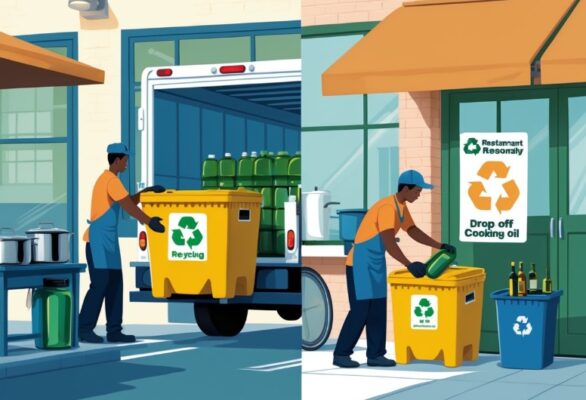
Restaurant owners can either have their used cooking oil collected right from their door or haul it themselves to a facility.
Both routes connect them with recycling companies that turn waste oil into biodiesel and other stuff.
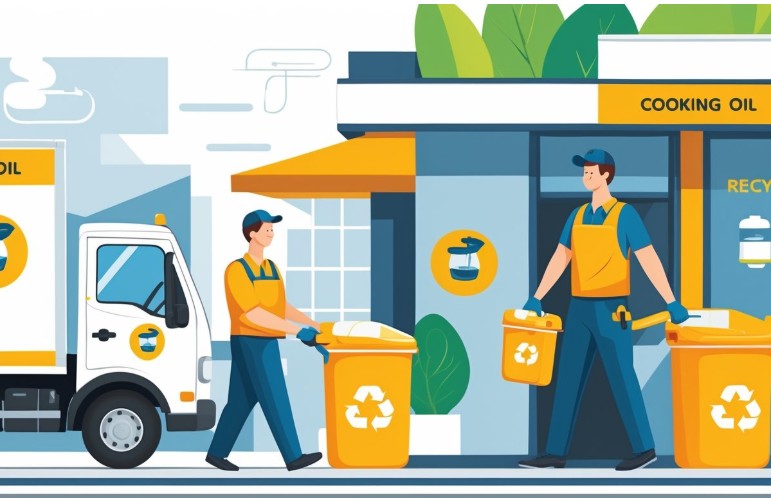
Pickup services mean professional oil recyclers come to the restaurant and collect used cooking oil on-site. The restaurant stores the oil in containers until pickup day arrives.
Companies like Mahoney Environmental and other licensed haulers show up with specialized trucks. They pump oil from tanks or grab containers filled with waste oil.
Drop-off services put the ball in the restaurant’s court. Staff must bring their used oil to designated collection points or recycling centers.
Some cities offer drop-off points where businesses can drop off sealed containers of oil. These places typically have regulations regarding container types and oil quality.
For both pickup and drop-off, the oil must be free of large food chunks and contaminants. Cleaner oil fetches a better price and is easier to process.
Restaurants start by filtering and storing their used oil in the right containers. They should remove food bits and water before storage to maintain the oil quality.
With pickup services, restaurants fill up storage tanks or containers on-site. Collection companies usually provide the storage equipment and adhere to a regular pickup schedule based on the amount of oil the restaurant produces.
For drop-off, restaurants use their own containers or buy approved ones. Oil needs to be sealed in clean, labeled containers before heading out.
Once collected, the oil is sent to processing plants and refined into biodiesel. Some companies also turn used oil into animal feed additives or industrial lubricants.
The entire process, from collection to finished product, typically takes 1-3 weeks. Owners often get paid for their oil based on the current market rate.
Licensed haulers have to follow strict rules for transporting and handling used cooking oil. They carry insurance and permits required by state and federal agencies.
With pickup services, haulers provide comprehensive cooking oil solution systems, including storage equipment, scheduled pickups, and necessary paperwork. They handle transportation and ensure everything remains compliant with the rules.
Drop-off still means the oil goes to a licensed facility. Restaurant owners handle the first leg of the journey but must deliver to approved drop-off points.
Licensed haulers track oil from pickup through processing to guarantee real recycling. They provide documentation proving the oil reached the correct facility—not some unregulated dumping ground.
Legit haulers always provide recycling certificates and keep detailed records. This protects restaurants from liability and ensures they comply with environmental laws.
Make grease disposal simple and secure. GreasePros Recycling offers professional used cooking oil pickup with free locked containers for Miami-Dade restaurants. Contact us today to schedule your first collection.
If you’re ready to get started, call us now!
Pickup services offer restaurants hands-off convenience with scheduled collections and secure storage, but they come with ongoing costs and contractual obligations.
These services work exceptionally well for busy kitchens that produce a large volume of used oil.
| Benefit | Description |
| Scheduled Collections | Take the guesswork out of oil disposal. Professional pickup services arrive on set days—weekly, bi-weekly, or monthly—preventing overflow and avoiding health code violations. |
| Secure Storage Systems | Locked containers prevent spills and unauthorized access, thereby reducing liability. Some systems even pump oil directly from fryers into storage for added safety. |
| No Transportation Needed | Saves staff time and vehicle expenses by eliminating disposal trips. Reduces injury risk and keeps employees focused on food service, not waste handling. |
| Theft Prevention | Protects against costly used oil theft. Locked containers and scheduled pickups make it difficult for thieves to steal valuable oil. |
| Con | Description |
| Monthly Service Fees | Pickup services typically cost $50–$200 per month, based on collection frequency and container size. Smaller restaurants may struggle to justify the expense. |
| Binding Contracts | Many providers require 12–36 month agreements with steep early termination fees, limiting flexibility if business volume changes or locations close. |
| Fixed Schedules | Set pickup days may not align with actual needs—leading to overflowing containers during busy weeks or wasted collections during slow weeks. |
High-volume restaurants using 50 gallons or more of oil weekly get the most from pickup services. These places generate enough oil to make the monthly fee worthwhile and require dependable disposal to prevent overflow.
Short-staffed kitchens benefit. Pickup enables managers to focus on food quality rather than waste management. It’s a lifesaver during busy seasons or when staff is stretched thin.
Multi-location chains can maintain consistency with their pickup services. Standard containers and schedules streamline operations and enhance compliance across all sites.
Drop-off services give restaurants more control over timing and cost, but they require staff time and effort. Smaller places often find drop-off programs affordable, though larger kitchens may struggle with the logistics.
| Pro | Description |
| Lower Cost | Drop-off programs often cost nothing. Many recycling centers accept used oil for free, and some pay for larger volumes of clean oil. |
| Cost Benefits | No monthly service fees, no equipment rentals, possible small payments for clean oil, and lower waste disposal expenses. |
| Flexible Timing | Staff can drop off oil during slow periods or combine trips with other errands, offering convenience for unpredictable schedules. |
| Good for Small Kitchens | Ideal for locations producing less than 50 gallons per month—such as food trucks, cafes, and small restaurants—where staff can safely manage the oil. |
| Con | Description |
| Requires Transportation | Staff must transport oil containers to disposal sites, which takes time away from kitchen work and requires vehicle space. Larger restaurants may require multiple trips per week. |
| Transportation Challenges | Includes staff time on trips, vehicle wear and tear, fuel expenses, weather disruptions, and limited container capacity. |
| Higher Spill Risk | Moving hot oil containers increases the risk of spills. Requires proper containers, training, and risk management to prevent messy and unsafe cleanups. |
| Less Secure | Drop-off sites may have limited hours, which can lead to overflow if they are unexpectedly closed. Restaurants must also prevent theft and unauthorized dumping in their containers. |
Drop-off works best for restaurants producing under 35 gallons of oil per month. Small pizza joints, sandwich shops, and casual spots fit this bill.
Ideal Drop-Off Candidates:
Seasonal businesses love drop-off for its flexibility. Ice cream shops, beachside restaurants, and holiday caterers can dispose of oil only when open—no need to pay for pickup when closed.
Restaurants with sporadic frying—such as bakeries that only make donuts occasionally—also find drop-off practical. They can schedule disposal in conjunction with their production schedule.
Places near community drop-off centers save even more time. Urban restaurants often have several disposal options close by.
Ready to prevent spills and theft? GreasePros Recycling provides reliable used cooking oil pickup services tailored to your schedule. Contact us now to book your next service.
If you’re ready to get started, call us now!
Pickup services usually cost more upfront, but save your staff time. Drop-off cuts direct fees but adds staff hours and transportation costs to the mix.
Hidden fees can turn “free” pickup services into thousands in losses, so it’s worth crunching the numbers before deciding.
Container costs can swing a lot. Pickup companies often provide free containers but charge more for each additional service. Drop-off locations expect you to purchase your own, and basic models range from $50 to $ 200.
Service frequency changes things, too. Pickup services charge a fee per visit, typically ranging from $15 to $50, depending on the amount of oil you have. More pickups mean higher costs, but a lower risk of overflowing.
Drop-off services are charged by volume, not by visit. You control when you go, but don’t forget to factor in staff pay for those trips.
Distance matters a lot. If the drop-off spot is within five miles, you’ll spend about $10-15 per trip on labor and gas. If it’s more than ten miles, expect double that in transportation costs.
Location plays a role, too. Urban restaurants typically receive better pickup rates because haulers can make more stops in one trip. Rural spots often find drop-off cheaper, just because of the distance and fewer hauler options.
Theft of used cooking oil is a real problem—restaurants lose an average of $200-$ 500 a month this way. Outdoor pickup containers make easy targets for thieves looking to resell the oil.
Locked containers cut theft by 80-90%, but you’ll pay extra—usually $25-75 more each month for those premium containers.
Drop-off eliminates the theft risk entirely, as you’re hauling the oil yourself to the recycling center. For high-volume spots, this can result in $2,000-$ 6,000 in annual savings.
Storing oil indoors before drop-off also keeps it cleaner and safer. Better-quality oil fetches a higher price at the recycling center—sometimes $0.10 to $ 0.30 more per gallon.
Security cameras and lights around pickup containers run $300-800. Even then, some thieves still find a way.
Small restaurants (10-20 gallons per week) usually pay $60-$ 120 per month for pickup. Drop-off costs an additional $25 in labor, plus $15 for transport, totaling $ 40 per month if you go weekly.
Medium restaurants (30-50 gallons per week) face $150-$ 300 per month for pickup. Drop-off costs $240, but oil sales can bring in $40-$80, so the net cost drops to $160-$200.
Large restaurants (using 75+ gallons of water weekly) pay $300-600 for pickup. Drop-off runs $320 for labor and transport, but oil sales can mean $120-200 in revenue.
| Restaurant Size | Weekly Volume | Pickup Cost | Drop-off Cost | Net Drop-off Cost |
| Small | 10-20 gallons | $60-120/month | $160/month | $160/month |
| Medium | 30-50 gallons | $150-300/month | $240/month | $160-200/month |
| Large | 75+ gallons | $300-600/month | $320/month | $120-200/month |
Both pickup and drop-off help with environmental protection if restaurants actually dispose of their oil properly.
The significant differences stem from the number of participants and the security of the collection, not the recycling process itself.
It doesn’t matter if oil gets picked up or dropped off—recycling centers process it the same way. They convert it into biodiesel, which reduces fossil fuel use.
The cooking oil recycling process starts by filtering out bits of food and junk. Workers then heat the oil to get rid of water and impurities.
After that, chemical processing changes the oil into biodiesel fuel. This stuff burns cleaner than regular diesel and releases fewer greenhouse gases.
Some recycled cooking oil ends up in animal feed or as industrial lubricants. It keeps waste out of landfills and waterways, which just makes sense.
Key recycling outputs include:
Regular pickups attract more restaurants than drop-off programs. Kitchen staff usually prefer scheduled collections to making extra trips out.
Restaurants that utilize pickup services typically recycle between 85% and 95% of their used oil. Drop-off programs don’t perform as well—only 60-70% participate, primarily due to scheduling issues.
Consistent pickups also prevent oil from sitting in storage for too long. Fresher oil makes better biodiesel and is easier for recycling centers to handle.
Pickup advantages:
Drop-off usually means oil sits around longer. When that happens, the oil can break down and lose value for recycling.
Professional pickup crews utilize specialized equipment that significantly reduces spills and leaks during transport. This keeps soil and water safe from contamination.
Technicians pump oil straight from storage containers into sealed trucks. Restaurant staff don’t have to mess with it, so there’s less chance of accidents.
Proper disposal methods make sure oil doesn’t end up in storm drains or sewers. Just one gallon of oil dumped the wrong way can pollute up to a million gallons of water—kind of wild, right?
Secure collection systems track every drop and where it goes. That way, there’s proof the oil actually made it to a legit recycling facility.
Security benefits:
Both approaches support environmental sustainability if implemented correctly, but pickup services are generally more reliable for collection and handling.
Choosing the right service provider means you get reliable pickups, stay compliant, and maximize the value of your waste oil.
Local, licensed companies typically offer better support and can resolve issues quickly if something goes wrong.
GreasePros Recycling operates a licensed used cooking oil pickup service, specializing in restaurant waste. They maintain all the necessary certifications and insurance for commercial oil collection.
Local providers truly understand the intricacies of regional regulations. They are familiar with the municipal codes and environmental requirements in your area, which helps restaurants avoid costly mistakes.
Response times are way better with local companies. Grease Pros can show up in hours during an emergency—not days. Their drivers know the shortcuts and regional traffic, which definitely helps.
Key advantages of local providers:
The company uses transparent pricing with no sneaky fees. Restaurant owners receive clear contracts that outline pickup schedules, container care, and payment terms. That kind of transparency fosters trust and maintains strong partnerships.
Professional services provide restaurants with secure storage containers at no cost. These containers come with locks, so theft and unauthorized access are not a significant concern.
They’re built tough enough to survive the chaos of a busy kitchen. You can count on them to withstand daily use.
Container sizes range from 35 to 240 gallons, depending on the amount of oil a restaurant uses. Services pay attention to what each place needs, matching capacity to real usage.
This careful matching helps avoid overflow and those dreaded health code violations. It’s a relief not to scramble when things get hectic.
Emergency retrieval services step in when things go sideways. If containers fill up faster than planned, providers typically arrive within 24 hours.
That quick response keeps the kitchen running and prevents shutdowns. It’s the sort of backup you don’t think about—until you need it.
Compliance support includes:
Reliable service partners help restaurants maintain cleanliness and keep costs lower. They take care of oil management from collection to processing, so you don’t have to sweat the details.
Choose convenience, compliance, and safety for your restaurant. GreasePros Recycling delivers secure, scheduled oil collection across Miami-Dade. Contact us today to arrange your pickup.
Which is better for my restaurant: used cooking oil pickup or drop-off?
Pickup offers convenience, security, and compliance, while drop-off can be more cost-effective for low-volume oil producers. The best choice depends on volume, budget, and staff availability.
How much does used cooking oil pickup cost?
Most pickup services range from $50 to $200 per month, depending on frequency, container size, and location. Some providers offer free containers as part of the service.
Are drop-off programs really free?
Yes. Many recycling centers accept used oil for free, and some even pay for large volumes of clean oil. However, transportation and staff time are your responsibility.
What happens to my oil after pickup or drop-off?
Licensed haulers and recycling centers convert used cooking oil into biodiesel, animal feed additives, or other renewable products, keeping it out of landfills.
Is the theft of used cooking oil a real problem?
Yes. Stolen oil can be resold illegally. Pickup services with locked containers significantly reduce the risk. Drop-off programs require secure storage until the materials are disposed of.
Can I switch from pickup to drop-off if my needs change?
In most cases, yes. However, please check the contract terms for pickup services, as early termination fees may apply.
Does Miami-Dade require a licensed hauler for oil pickup?
Yes. Miami-Dade County mandates that only licensed haulers handle the pickup of used cooking oil to comply with local FOG regulations.
Founded with a vision to revolutionize the used cooking oil recycling industry, GreasePros Recycling has established itself as a trusted and leading provider of sustainable waste management solutions. With over 20 years of experience, our dedicated team brings extensive expertise and a commitment to environmental stewardship.
Quick Links
Contact Information
Get in Touch with GreasePros