Trusted and leading provider of sustainable waste management solutions from 20 years. (786) 655-7070
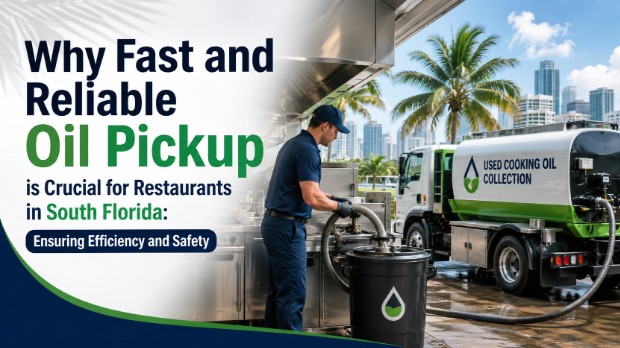
Fast and reliable oil pickup keeps South Florida restaurant kitchens compliant, safe, and free of grease-related shutdowns. Restaurants that schedule consistent used-oil pickup prevent clogged drains, FOG violations, and fire hazards associated with oil buildup.
Delayed or inconsistent service allows grease to accumulate beyond safe storage limits, increasing the risk of spills, odors, and failed health inspections.
GreasePros Recycling documents every pickup and converts collected oil into biodiesel, so kitchens stay compliant while supporting Florida’s statewide used oil recycling program.
Grease buildup doesn’t wait for a convenient day — schedule your pickup with GreasePros Recycling and keep your kitchen compliant and running smoothly.
South Florida restaurants face three recurring challenges with used cooking oil: operational disruption, environmental risk, and health code exposure. Each one compounds when pickup schedules slip.
Storing and collecting used oil consume staff time that could go toward food prep, and innovative collection methods reduce, but don’t eliminate, that burden. Kitchens that fall behind on pickup scheduling risk grease pooling near fryers and dish stations.
Improper disposal also creates environmental exposure. Any Miami-Dade food-handling facility with the potential to discharge fats, oils, or grease into the sanitary sewer system is classified as a FOG generator and required to hold a permit — restaurants, cafeterias, schools, and food courts all fall under this rule.
Unmanaged oil storage raises slip-and-fall and fire risk near cooking equipment, and inconsistent service leaves restaurants exposed during health inspections. Predictable kitchen operations depend on oil handling that runs on a fixed schedule rather than a reactive one.
Fast oil pickup keeps kitchen staff focused on service instead of waste management, and consistent scheduling prevents storage overflow before it becomes a hazard.
Scheduled, predictable pickups prevent oil containers from reaching capacity between visits, which keeps walkways and prep areas clear. Restaurants working with a reliable hauler spend less time coordinating emergency swaps and more time on service.
Rapid removal reduces lingering odors and pest activity near dumpster and storage areas — two of the most common causes of failed inspections. A tight pickup cycle keeps that risk entirely out of the kitchen.
If you’re ready to get started, call us now!
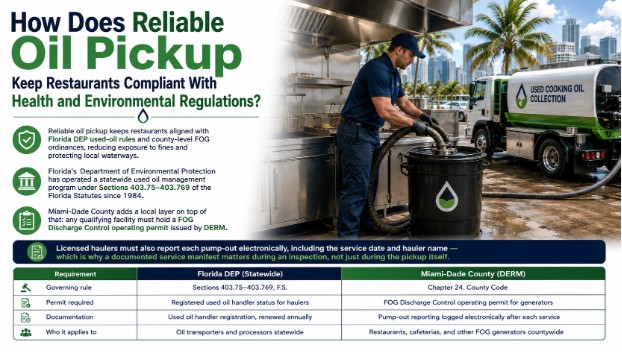
Reliable oil pickup keeps restaurants aligned with Florida DEP used-oil rules and county-level FOG ordinances, reducing exposure to fines and protecting local waterways.
Florida’s Department of Environmental Protection has operated a statewide used oil management program under Sections 403.75–403.769 of the Florida Statutes since 1984. Miami-Dade County adds a local layer on top of that: any qualifying facility must hold a FOG Discharge Control operating permit issued by DERM.
Licensed haulers must also report each pump-out electronically, including the service date and hauler name — which is why a documented service manifest matters during an inspection, not just during the pickup itself.
| Requirement | Florida DEP (Statewide) | Miami-Dade County (DERM) |
| Governing rule | Sections 403.75–403.769, F.S. | Chapter 24, County Code |
| Permit required | Registered used oil handler status for haulers | FOG Discharge Control operating permit for generators |
| Documentation | Used oil handler registration, renewed annually | Pump-out reporting logged electronically after each service |
| Who it applies to | Oil transporters and processors statewide | Restaurants, cafeterias, and other FOG generators countywide |
Stop worrying about permit renewals and pump-out logs — GreasePros Recycling documents every visit so your kitchen stays inspection-ready year-round for South Florida restaurants.
Restaurants should confirm a provider’s licensing, response time, and container options before signing a service agreement — a gap in any one of the three creates compliance or operational risk.
Before booking service, it helps to compare pickup providers on DOT registration, DERM licensing where applicable, and manifest documentation practices.
Confirm free container sizing fits your kitchen’s volume, and ask about emergency retrieval response times for unexpected overflow.
High-volume kitchens — hospitals, casinos, banquet halls — need flexible scheduling that goes beyond a fixed weekly route, since their oil output doesn’t follow a standard restaurant curve.
If you’re ready to get started, call us now!
GreasePros Recycling combines flexible scheduling, emergency retrieval, and free containers into a single service model designed for restaurant kitchens across South Florida.
| Service Feature | What It Means for Your Kitchen |
| Flexible scheduling | Pickup frequency matches your kitchen’s oil volume, not a fixed route |
| Emergency retrieval | Rapid response when storage fills faster than expected |
| Free containers | No upfront equipment cost, sized to your kitchen |
| Documented pickups | Service manifest issued after every visit for inspection records |
Our process covers everything from container drop-off to biodiesel conversion. Restaurants across Boca Raton, Fort Lauderdale, and the greater Miami area rely on the same service-area coverage for consistent scheduling, even during hurricane season.
Specialized accounts, including hospitals and casinos, receive the same documented pickups as standard restaurant clients.
Collected oil moves from restaurant storage into a documented recycling chain that ends in biodiesel and other reusable products — not a landfill or the sewer system.
Florida’s used oil recycling program has recycled millions of gallons through registered handlers since its inception in 1984. Processed oil is converted into biodiesel fuel and other industrial products rather than entering the waste stream.
Every gallon converted this way reduces the volume of oil that would otherwise require eco-friendly recycling practices to correct after a spill or clog — prevention instead of cleanup.
Don’t let a missed pickup put your kitchen, your inspection score, or your reputation at risk — contact GreasePros Recycling today for dependable service.
Why is fast oil pickup important for South Florida restaurants?
Fast oil pickup prevents grease from exceeding safe storage limits, which reduces fire risk, slip hazards, and odor complaints near kitchen and dumpster areas. Restaurants that keep pickup schedules up to date also avoid plumbing damage and drain clogs that come with delayed oil removal.
How often should a South Florida restaurant schedule oil pickup?
Pickup frequency depends on kitchen volume, fryer count, and storage container size rather than a fixed calendar rule. High-volume kitchens typically need weekly service, while smaller operations may schedule biweekly or monthly pickups based on how quickly containers reach capacity.
What happens if a restaurant’s oil storage overflows between pickups?
Overflow creates a spill hazard, attracts pests, and increases the risk of oil reaching the floor or storm drains, violating Florida disposal rules. Restaurants facing an overflow risk should request an emergency retrieval rather than wait until the next scheduled pickup date.
Does Miami-Dade County require restaurants to hold a FOG permit?
Yes. Any Miami-Dade food-handling facility with the potential to discharge fats, oils, or grease into the public sanitary sewer must hold a FOG Discharge Control operating permit issued by the county’s Department of Environmental Resources Management, renewed annually and tied to the specific facility.
Can restaurants pour used cooking oil down the drain in Florida?
No. Florida regulations prohibit disposing of used oil into sewers, storm drains, or regular trash because it contaminates water supplies and damages sewer infrastructure. Restaurants must work with a licensed hauler that follows Florida Department of Environmental Protection recycling standards for collection and processing.
What should a restaurant check before hiring an oil pickup company?
Restaurants should confirm the hauler’s DOT registration, DERM licensing where applicable, and manifest documentation practices before signing a service agreement. Container sizing, emergency retrieval availability, and pickup frequency options also matter for kitchens with variable or seasonal oil volume.
Does GreasePros Recycling offer emergency oil retrieval?
Yes. GreasePros Recycling provides emergency retrieval for restaurants facing unexpected overflow between scheduled pickups, in addition to standard flexible scheduling. This service prevents storage containers from exceeding capacity during high-volume periods such as holidays or special events.
What types of businesses use restaurant oil pickup services besides restaurants?
Cafeterias, hospitals, casinos, hotels, and food courts all generate used cooking oil and typically fall under the same FOG generator classification as restaurants. These facilities benefit from the same documented pickup schedules and licensed hauler requirements as standard kitchens.
Does recycled restaurant oil actually get turned into fuel?
Yes. Used cooking oil collected from restaurants is processed into biodiesel and other renewable products through Florida’s used oil recycling program, which has operated since 1984. This process keeps oil out of landfills and waterways while supporting the state’s broader recycling goals.
Founded with a vision to revolutionize the used cooking oil recycling industry, GreasePros Recycling has established itself as a trusted and leading provider of sustainable waste management solutions. With over 20 years of experience, our dedicated team brings extensive expertise and a commitment to environmental stewardship.
Quick Links
Contact Information
Get in Touch with GreasePros